Related Articles
The Delta Regional Authority announced 11 additional facilities chosen to participate in the Delta Region Community Health System Development (DRCHSD) Program.

Founder and Senior Advisor for Rural Health Leadership and Policy at The Center, Terry Hill, shares his experience and insight on the forward movement towards the value based care model in rural healthcare. He has seen how it is one of the most effective strategies that help rural communities thrive.
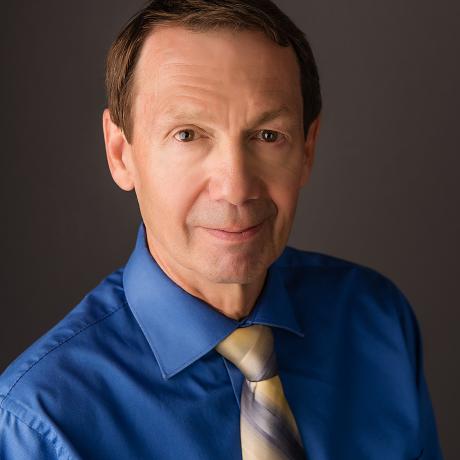
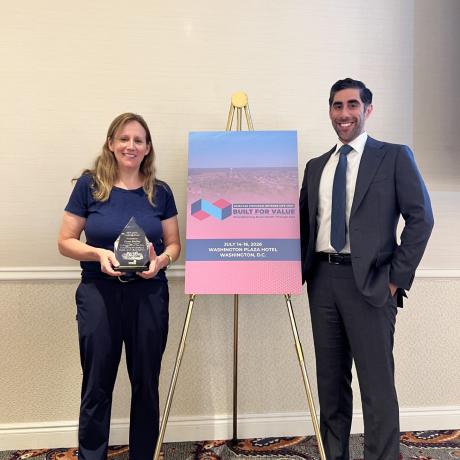
Karen Madden, Director of the Center for Health Care Policy and Resource Development at the New York State Department of Health, has received the 2026 Calico Quality Leadership Award for her lasting contributions to rural health care and the Medicare Rural Hospital Flexibility (Flex) Program. The award was presented during the annual Flex Program Reverse Site Visit held July 14-16 in Washington, D.C.
"I use my experience on the farm to help drive creativity."
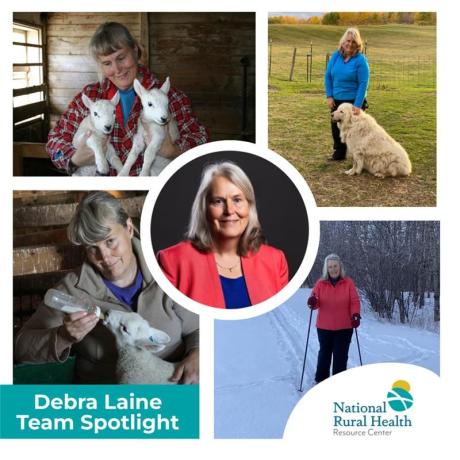
The Center is proud to shine a spotlight on Deb Laine, one of our program specialists who lives with her husband on a 40-acre farm, along with a flock of sheep, lots of chicken and rabbit, and a guard dog. Her life experience helps guide the high-quality technical assistance the Center provides nationwide.
Read this month's Employee Spotlight for more about Deb, life on the farm, and the 11 years she's spent at The Center.
The Center is proud to shine a spotlight on Deb Laine, one of our program specialists who lives with her husband on a 40-acre farm, along with a flock of sheep, lots of chicken and rabbit, and a guard dog. Her life experience helps guide the high-quality technical assistance the Center provides nationwide.
Read this month's Employee Spotlight for more about Deb, life on the farm, and the 11 years she's spent at The Center.
The future of rural health depends on local voices, bold ideas, and shared commitment.