Susquehanna Family Health Clinic: Improving Whole-Family Care
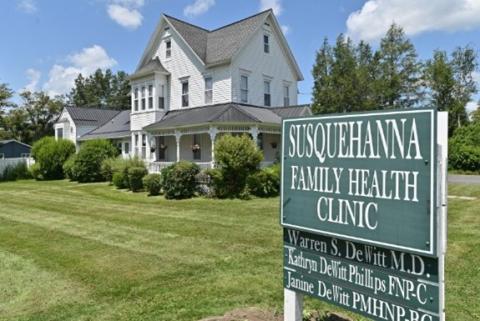
The National Rural Health Resource Center (The Center) and Stratis Health traveled to Susquehanna Family Health (SFH) on June 30 and July 1, 2026, for a Rural Healthcare Provider Transition Project (RHPTP) on-site technical assistance (TA) visit. SFH is an independent, family-owned rural health clinic located in Susquehanna, PA, serving a 7-zip code region and shares its service area with two critical access hospitals. The facility offers a full range of primary care services, prenatal care up to 20 weeks, well baby and well child visits, pediatric and adolescent care, men’s and women’s health, family planning, geriatric care and vaccines. SFH is a member of the Pennsylvania Independent RHC Network and the National Association of Rural Health Clinics.
Stratis Health provided technical assistance focused on care coordination, data and performance measurement, and community resource mapping. The visit supported SFH leadership and staff in strengthening care coordination processes by developing a shared vision for the initiative. Additional discussions focused on social drivers of health, improving data accuracy and collection methods, identifying meaningful performance measures, and enhancing dashboards and tracking systems to support ongoing quality improvement.
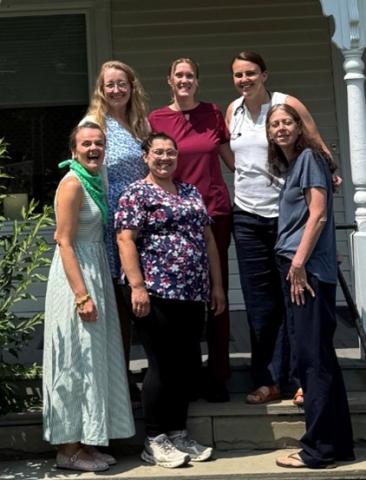
The Center and Stratis Health met with Carrie DeWitt, Director of Operations, Dr. Warren DeWitt and clinic staff to provide guidance on building and sustaining a community care coordination program. Discussions included strategies for streamlining referrals, identifying meaningful data to support patient care and reimbursement, and leveraging community resources to address social drivers of health. The team also explored approaches to collecting and using data over time, including the development of dashboards to better understand patient populations, monitor outcomes, and measure the impact of care coordination efforts.
Upon completion of the visit, opportunities for continued development included:
Developing structured documentation templates with Athena to improve data capture and trend analysis
Expanding staffing capacity by adding social work support and an additional primary care provider
Improving transportation resources, particularly for patients traveling across county lines
Expanding access to mental health and crisis intervention services
Strengthening referral processes and care coordination support
Implementing Advanced Primary Care Management (APCM) services
Next steps include enhancing documentation and tracking systems for non-medical needs and referrals to better demonstrate program impact, addressing staffing needs, potentially through formal collaboration with Wayne Health System, and identifying reimbursement opportunities. Stratis Health will continue partnering with the clinic to explore strategies and tools that strengthen comprehensive care planning and care coordination. Efforts will focus on leveraging social drivers of health data to inform staff decisions, support reimbursement, and build a sustainable, patient-centered care coordination model that meets the evolving needs of the community.
Key Takeaways SFH has a dedicated and compassionate team that remains deeply committed to meeting the needs of its patients and community. Staff are continuously refining care coordination processes, strengthening referral pathways, connecting patients with appropriate community resources, and providing meaningful follow-up to improve health outcomes. Their ongoing commitment to collaboration and continuous improvement positions the organization well for success in a value-based care environment.
Speare Memorial Hospital (SMH), a critical access hospital located in Plymouth, New Hampshire, was one of six organizations selected to participate in the 2022-2023 Rural Health Provider Transition Project (RHPTP). SMH has seen RHPTP’s impact on their improved organizational culture and overall patient experience and is a wonderful example of a health care organization utilizing existing resources to bolster their many strengths and recent goals. The RHPTP team is excited to see what this transition to value-based care brings to their community and is so fortunate to celebrate their progress and commitment in the project. Read more about SMH's top accomplishments and current initiatives toward greater care coordination.

“We get to build relationships with people who are on the ground and seeing the impact."
In this month's employee spotlight, hear how TASC and SHIP Program Manager Rachel Endo's rural roots shaped her passion for public health and how it continues to fuel her work supporting rural providers nationwide.
Guadalupe County Hospital surpasses their six-month SRHT goals.
Hospital Spotlight
The Health Resources and Services Administration (HRSA), Department of Health and Human Services (HHS) provided financial support for this Rural Healthcare Provider Transition Project. The award provided 100% of total costs and totaled $800,000. The contents are those of the author. They may not reflect the policies of HRSA, HHS, or the U.S. Government.
As a technical assistance provider to rural health care organizations, the National Rural Health Resource Center provides access to a wide range of resources on relevant topics. Inclusion on the National Rural Health Resource Center’s webpage or presentations does not imply endorsement of, or agreement with, the contents by the National Rural Health Resource Center or the Health Resources and Services Administration.