Related Articles
“Our mission and our vision speak to me because the work that we do is important."
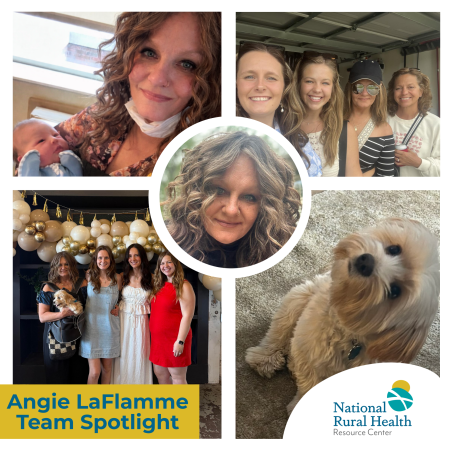
Throughout her 30-year long career with The Center, Lead Program Specialist Angie LaFlamme's passion for supporting rural organizations has remained constant. In this month's employee spotlight, hear Angie's reflections on her path in The Center, the importance of value-based care, and what it means to keep community at the heart of her work.
Throughout her 30-year long career with The Center, Lead Program Specialist Angie LaFlamme's passion for supporting rural organizations has remained constant. In this month's employee spotlight, hear Angie's reflections on her path in The Center, the importance of value-based care, and what it means to keep community at the heart of her work.
“Access to opportunity can change the course of a family’s future.”
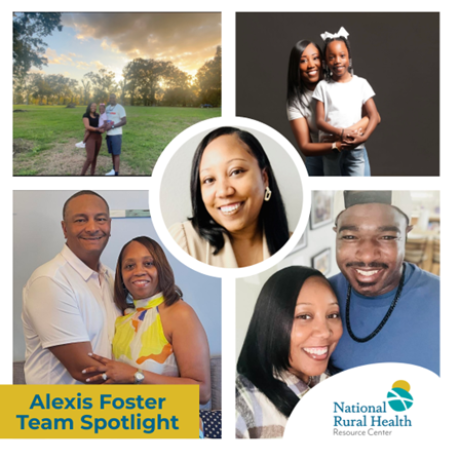
As a lead program specialist, Alexis is no stranger to workforce and leadership development and understanding the ways in which its broader impact has on rural communities. In this month’s employee spotlight, Alexis shares her thoughts on what it means to be a representative of the workforce, how to maintain sustainability in an organization, and the importance of listening to what matters.
As a lead program specialist, Alexis is no stranger to workforce and leadership development and understanding the ways in which its broader impact has on rural communities. In this month’s employee spotlight, Alexis shares her thoughts on what it means to be a representative of the workforce, how to maintain sustainability in an organization, and the importance of listening to what matters.
“We can’t always fix a rural problem with a big city solution."
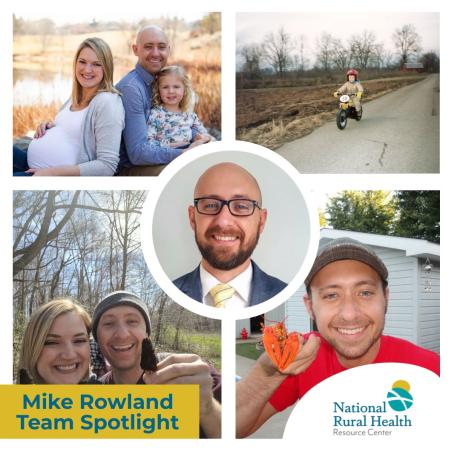
In this month's employee spotlight, The Center's Lead Program Specialist, Mike Rowland, shares his thoughts on growing up in a rural community, how his background influenced his perspective, and his role in leading technology conversations with rural hospitals and clinics.
In this month's employee spotlight, The Center's Lead Program Specialist, Mike Rowland, shares his thoughts on growing up in a rural community, how his background influenced his perspective, and his role in leading technology conversations with rural hospitals and clinics.
Is your rural health care organization working toward improved care coordination? Learn about the many strategies adopted by Meeker Memorial Hospital, a critical access hospital in Litchfield, Minnesota, that participated in the 2022-2023 RHPTP cohort. Since completing the project, the hospital has achieved many of its RHPTP goals and plans to proceed with initiatives that will allow it to continue on the path toward value-based care.

Northern Maine Medical Center (NMMC), a 49-bed, perspective payment hospital located in Fort Kent, Maine, was one of six organizations selected to participate in the 2022-2023 Rural Health Provider Transition Project (RHPTP). Read more about their year-long engagement in RHPTP, as NMMC worked with RHPTP’s technical assistance consultants on financial and operational improvements, as well as strategy and infrastructure to improve quality in preparation for participation in alternative payment and care delivery models.